
Aquatic Therapy in ACL Rehabilitation: Supporting Strength, Movement & Recovery
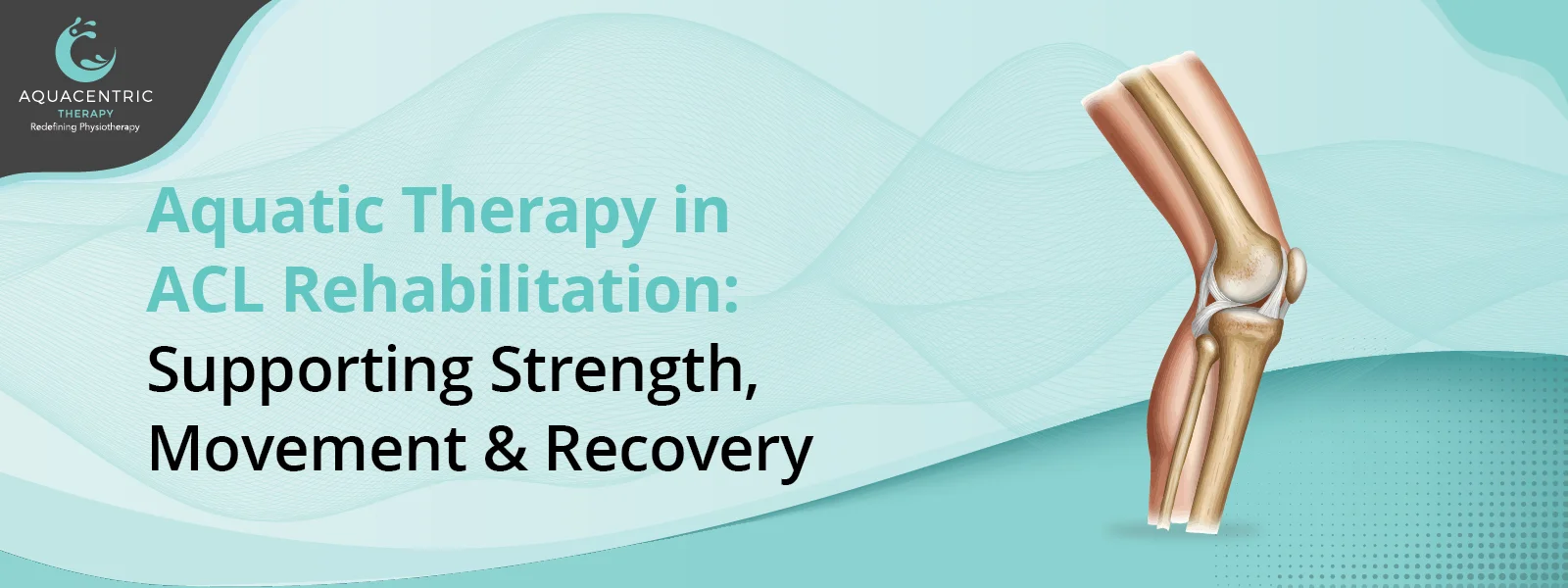
The anterior cruciate ligament (ACL) is one of the key stabilising structures of the knee, which connects the thigh bone (femur) to the shin bone (tibia). It helps to control the knee movement and stability. Sometimes the ACL is injured by sudden changes in direction, awkward landings, or twisting movements which commonly affect movement, balance, and physical activity. Beyond swelling, pain, and instability, the injury can also impact movement confidence and the ability to resume routine activities comfortably.
Recovery after an ACL injury often entails more than just waiting for the knee to heal. Rebuilding strength, balance, and confidence is equally important for helping individuals return safely to daily activities. As rehabilitation methods continue to evolve, aquatic therapy is increasingly being included with traditional rehabilitation. By reducing stress on joints while encouraging gentle movements, it can support a smoother transition through different stages of recovery.
Why Does Early ACL Recovery Feel Challenging?
In the initial stages after an ACL injury or surgery, many people experience stiffness, swelling, reduced strength, and a noticeable hesitation during movements. Even simple activities such as walking or bending the knee can feel uncomfortable or uncertain. Along with physical discomfort, a subtle fear of “doing too much” is also usually there. This is where the rehabilitation environment can make a significant difference.
Recover Confidently With Aquatic Rehabilitation Support
What Makes Aquatic Therapy Different?
Rehabilitation in water creates an environment where movement feels more manageable right from the start. When the body is immersed in water, buoyancy helps reduce the load placed on the knee joint. This allows movements to happen with lower strain as well as discomfort. For someone who is just beginning to regain mobility, this can make a noticeable difference not only physically but mentally as well.
Water also provides natural resistance. Different than weights or machines, this resistance is smooth and adapts to the speed of movement. This allows muscles to work in a way that feels controlled rather than forced.
Another subtle but important benefit is the sense of support water provides. Being in water often helps people feel more stable, which helps reduce hesitation during movement. When the hesitation begins to decrease, movement quality and confidence also begin to improve. This helpful environment is one of the reasons why aquatic therapy for knee pain is usually included in rehabilitation and recovery programmes.
1. Supporting a Smoother Recovery Progression
One of the biggest advantages of using water in ACL rehabilitation is how it allows recovery progression to feel more gradual as well as controlled. Instead of moving directly from very basic movements into demanding land-based exercises, aquatic therapy helps build a middle ground. It allows individuals to explore movement, regain rhythm, and gradually rebuild strength without overwhelming the joint.
Methods which are focused on improving strength and range of motion through aquatic therapy can further support more controlled movement progression during recovery.
Patients generally describe this phase as the point where they start to feel “normal” again, not because everything is fully healed, but because movement starts to feel smoother and more predictable. From guarded movement to more confident motion, such a transition is a vital part of recovery.
2. Rebuilding Strength Without Overloading
Strength is a crucial part of ACL recovery, but how that is developed matters.
On land, rebuilding strength usually involves adding loads, resistance bands, or bodyweight exercises. Although helpful, these can sometimes feel demanding, particularly when the knee is still adapting to movement and loading post-surgery or injury.
In an aquatic environment, resistance comes naturally from the movement itself. The faster or more controlled the movement, the greater the muscular challenge becomes. This allows strengthening exercise to take place in a way which feels less aggressive while still being effective.
Rather than avoiding effort, aquatic therapy allows strengthening to be introduced in a more gradual and controlled manner.
3. Improving Movement Quality and Control
Another aspect which usually fails to be noticed during recovery is how the body moves, not just whether the movement is possible. After the ACL injury, the body naturally tries to protect itself. People may switch weight to the other leg, avoid certain movements, or move in a way that feels safer but may not be appropriate in the long term.
The aquatic environment helps in resolving this by providing a setting which is controlled and supports movements. Exercises can be done with more awareness and stability, making it easier to identify and also correct patterns early in the recovery. Research on aquatic therapy for balance and movement control has also emphasised its role in increasing functional mobility and stability in different populations. This can result in improved alignment, balance, and efficient movement.
4. Rebuilding Confidence During Recovery
The knee may be healing well externally, but mentally, the recovery may feel more challenging. For many, the fear of re-injury is there, mainly in cases when they are returning to activities involving sudden movements or changes in direction.
In an aquatic environment, these movements can be introduced again more naturally. The reduced impact, supportive nature of the aquatic environment can make it easier to perform movements which may be challenging to perform on land.
When confidence starts to grow in the presence of water, it further transports to land-based activities as well. This shift of feeling mentally ready rather than just physically prepared is an important sign of overall recovery.
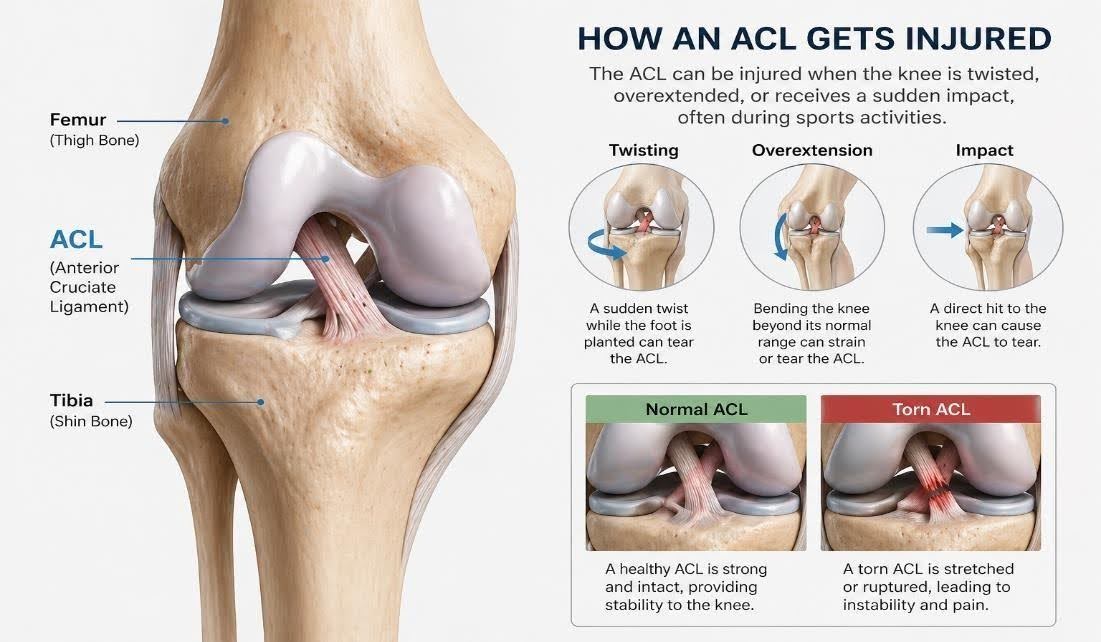
How Does Aquatic Therapy Fit Into ACL Rehabilitation?
Understanding that aquatic therapy is not designed to replace traditional rehabilitation is very crucial. It works best when combined into a broader recovery plan.
Trainings which are land-based remain vital to building greater strength, tolerance, and physical performance. While aquatic therapy can play a valuable role in preparing the body for these demands.
It can act as a bridge which connects early recovery with advanced rehabilitation, making the transition smoother and more manageable.
What Benefits Do Patients Commonly Notice?
Individuals who include aquatic therapy in their recovery commonly report:
- Less discomfort during exercise
- Easier movement during the early stages of recovery
- Improved confidence during movement and daily activities
- A smoother transition back to land-based rehabilitation
What Does Research Say About Aquatic Therapy for ACL Recovery?
Current research continues to emphasise the role of aquatic therapy in ACL rehabilitation.
A study in 2024 titled “Effectiveness of Aquatic Therapy on Pain, Function, and Strength After ACL Reconstruction” discovered that individuals who had water-based rehabilitation as part of their recovery experienced:
- Pain levels reduced.
- Better improvement in knee function.
- Greater improvements in muscle strength and mobility.
The aquatic group showed improvements in comfort, mobility, and certain functional outcomes during recovery in comparison to individuals who only followed land-based rehabilitation programmes.
Start ACL recovery with guided aquatic and land-based rehabilitation.
Conclusion
Recovering from an ACL injury is not only about reaching an endpoint; it is about how you get there. The goal is not simply to resume activity but to return with confidence, control, resilience, and greater trust in movement.
By reducing joint stress while promoting steady movement, aquatic therapy can play a key role in helping patients rebuild mobility, strength during different stages of recovery. Right from the first careful step to a confident return, when supported by the right rehabilitation environment, recovery often is more manageable.
At AquaCentric Therapy, recognised as one of the best physiotherapy clinics in Mumbai, our approach to rehabilitation is a combination of evidence-informed aquatic as well as land-based rehabilitation strategies, personalised to each individual’s recovery journey and functional outcomes in long-term. Get in touch with us to know how our team supports progressive ACL recovery.
FAQs
1. How does aquatic therapy help in ACL recovery?
Aquatic therapy helps reduce stress on the knee joint while allowing safe movement and exercise. It can support improvements in mobility, strength, balance, and confidence during recovery.
2. When can I start aquatic therapy after ACL reconstruction?
The timing depends on the surgeon’s or physiotherapist’s recommendation, but many people may begin aquatic therapy once the surgical wounds have healed properly and the knee is medically cleared for water-based exercise.
3. Can aquatic therapy reduce pain after ACL surgery?
Yes, the buoyancy of water helps reduce pressure on the knee, which may make movement more comfortable and help ease pain and stiffness during rehabilitation.
4. What exercises are done during aquatic ACL rehabilitation?
Aquatic ACL rehabilitation may include walking exercises, gentle range-of-motion movements, balance training, leg strengthening exercises, and controlled functional movements performed in water. Contact us for more details.
5. Is aquatic rehabilitation suitable for non-athletes recovering from ACL injuries?
Yes, aquatic rehabilitation can benefit both athletes and non-athletes by providing a low-impact environment that supports safer and more comfortable recovery.

Dr Pranay Sawant - Physiotherapist
Dr Pranay Sawant is a skilled Physiotherapist at AquaCentric, specialising in Musculoskeletal (MSK) rehabilitation and pain management. He holds a Master of Physiotherapy (MPT) degree from the Maharashtra University of Health Sciences, Nashik, and brings over three years of clinical experience in helping patients improve mobility, recover from injuries, and enhance physical performance. Dr Sawant has completed specialised training in sports taping, EMG and nerve workshops, IASTM, and advanced physiotherapy techniques. He is also a published researcher with a focus on musculoskeletal health and rehabilitation.
