

Improving Balance & Coordination in Kids: A Parent's Guide
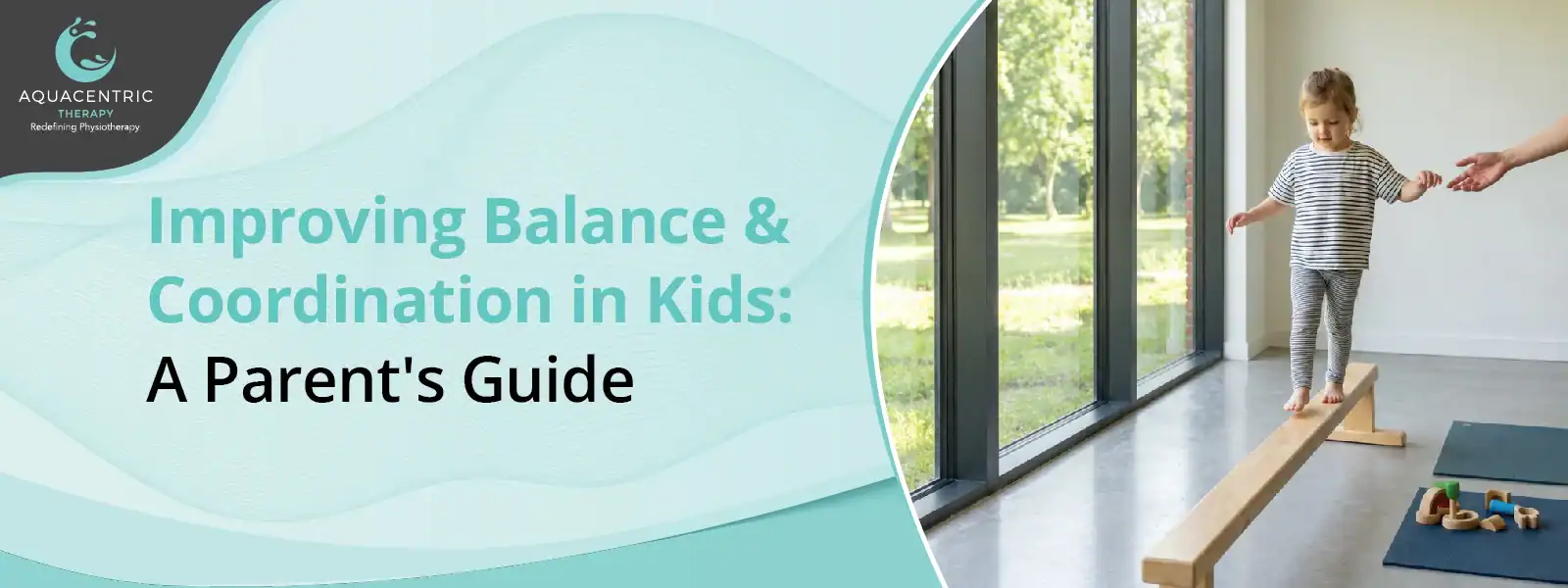
From taking their first steps to running, climbing and playing, children rely on balance and coordination every day. These skills help them control their bodies, move safely and take part in activities with greater confidence and independence. Most children develop them naturally through regular movement and play, while some may need additional support to build specific skills. Age-appropriate activities can make practice enjoyable while encouraging better body control and motor development. For children who need guided support, paediatric physiotherapy can provide structured, individualised programmes. AquaCentric Therapy uses aquatic physiotherapy to support children with movement and balance needs in a supervised setting.
Why Early Balance & Coordination Training Matters
Balance and coordination help children control their bodies, move safely and participate confidently in everyday activities and play. For children who need guided support, child physiotherapy in Mumbai can provide structured, age-appropriate movement programmes.
- Postural Control: Helps children maintain stable positions and coordinate their body during movement.
- Movement Safety: Supports controlled movements such as walking, running, jumping, climbing and changing direction.
- Sports Participation: Develops the coordination needed for activities such as kicking, throwing, catching and jumping.
- Confidence & Independence: Better movement control can help children participate more comfortably in play and age-appropriate activities.
- Motor Skill Development: Provides a foundation for developing gross motor skills and learning more complex movement patterns.
What Activities Help Improve Balance and Stability in Kids?
Children can develop balance and stability through playful, age-appropriate activities. The right activity will depend on the child’s age, abilities and safety needs.
- Balance Games: Walking along a line, stepping between markers or standing on one foot can provide simple balance challenges for children who are ready for them.
- Movement Games: Games involving jumping, hopping, changing direction or reaching can encourage controlled movement.
- Obstacle Courses: Simple routes using safe household or playground objects can encourage children to step over, around and through obstacles.
- Sensory-Motor Play: Activities involving different surfaces, body positions or movement directions can help children practise body awareness and control.
- Age-Appropriate Challenges: Throwing and catching, climbing, kicking a ball or following movement sequences can combine balance with coordination.
- Active Play: Walking, running, dancing and other enjoyable activities give children regular opportunities to practise movement skills in varied ways.
Activities should be enjoyable and appropriately challenging rather than frustrating. Parents should provide supervision and adapt activities to the child’s abilities.
Parents can also refer to the WHO guidelines for physical activity in children under five, which offer broader recommendations on active play, sedentary behaviour and sleep during early childhood.
How Do Balance and Coordination Skills Support Everyday Development?
Balance and coordination are not limited to sports or playground activities. They are involved in many everyday tasks that require a child to control posture, plan movement and respond to changes in the environment.
- Playground Participation: Climbing, stepping, running and balancing help children take part in active play with greater control.
- Sports Readiness: Coordination supports skills such as kicking, catching, throwing, jumping and changing direction.
- Classroom Activities: Postural control and coordination may support activities such as maintaining a comfortable seated position, moving between activities and handling classroom materials.
- Movement Confidence: Children who feel more secure during movement may be more willing to try new physical activities.
- Social Participation: Joining games and physical activities can create opportunities to interact and play with other children.
These skills develop gradually, and children reach movement milestones at different times. Looking at a child’s overall development, rather than one isolated skill, is important.
Is your child struggling with balance or coordination?
How Can AquaCentric Therapy Support Balance and Coordination Development?
AquaCentric Therapy, a leading physiotherapy clinic in Mumbai, uses aquatic physiotherapy to provide structured movement practice for children. Exercises are selected according to each child’s abilities and therapy goals and may include:
- Water-Based Movement Training: Water provides buoyancy and resistance, allowing children to practise movements with support while gradually building strength and control.
- Sensory Input: The pressure and resistance of water provide sensory feedback during movement, helping children become more aware of their body and position.
- Postural Control: Aquatic exercises can help children practise maintaining and adjusting their posture during different movements and positions.
- Body Awareness: Guided activities encourage children to recognise and control how their body moves through the water.
- Therapist-Guided Programmes: A physiotherapist plans and supervises activities based on the child’s individual movement needs and goals.
- Individualised Progression: Exercises can be adapted and gradually progressed as the child develops better control, balance and coordination.
Want to understand why the water environment can support rehabilitation? Explore the science behind aquatic therapy to learn more about how water’s properties can influence movement and therapy.
When Should Parents Seek Professional Support?
Occasional trips are common as children learn and grow. Persistent difficulties may be worth discussing with a paediatrician or physiotherapist. Parents may consider seeking professional assessment if a child:
- Falls Frequently: Regular falls or difficulty maintaining balance seem unusual or interfere with play.
- Avoids Physical Activities: The child avoids running, climbing, jumping or age-appropriate movement.
- Shows Delayed Motor Skills: The child is not progressing through expected movement milestones or has lost a previously acquired skill.
- Struggles With Daily Tasks: Coordination difficulties affect activities such as dressing, handwriting or moving safely.
- Lacks Movement Confidence: Fear or frustration limits participation.
Developmental milestones vary, and one sign alone does not necessarily indicate a problem. A professional assessment can help identify the child’s needs and whether therapy is appropriate. AquaCentric Therapy can assess movement needs and develop an individualised programme when guided support is appropriate.
Looking for the right physiotherapy support for your child?
Conclusion
Balance and coordination develop through practice, play and everyday movement. Giving children regular opportunities for active movement can support motor skill development. For children who experience ongoing difficulties, professional assessment can identify specific needs and guide appropriate intervention. Aquatic physiotherapy may be one option for children who benefit from supported movement practice, but the approach should be individualised to the child’s goals and abilities. With appropriate activities and support, children can work towards greater confidence and independence in movement. Looking for the right support for your child’s movement and balance needs? Connect with our team to understand how aquatic physiotherapy may help.
FAQs
1. What causes poor balance and coordination in children?
Balance and coordination difficulties can have various causes, including differences in motor development, muscle weakness, neurological conditions or challenges with sensory and body awareness. A professional assessment can help identify the underlying factors.
2. At what age can children start balance exercises?
Simple balance activities can be introduced from an early age through age-appropriate play and movement. The activity should match the child’s developmental stage and physical abilities.
3. How often should kids practise balance activities?
Regular, short sessions incorporated into play and everyday activities can help children practise these skills consistently. The frequency can vary based on the child’s age, abilities and goals.
4. Can water-based therapy improve coordination?
Aquatic physiotherapy can provide supported movement practice using the buoyancy and resistance of water, which may help children work on coordination, balance and body control as part of an individualised programme.
5. When should parents consult a therapist for balance issues?
Parents may consider professional assessment if balance difficulties are persistent, affect daily activities or limit participation in play. Contact our team to discuss your child’s movement needs and whether physiotherapy may be appropriate.

Dr. Daisy Lobo - Associate Physiotherapist
Dr. Daisy Lobo (PT) is an Associate Physiotherapist at AquaCentric with 6 years of clinical experience in orthopaedic rehabilitation. She holds a Bachelor of Physiotherapy (BPT) from Father Muller College of Allied Health Sciences and is certified by the International Aquatic Therapy Faculty (IATF). Dr. Daisy is trained in Dry Needling, Kinesiology Taping, and Cupping Therapy, enabling her to provide evidence-based, personalised treatment plans that help patients reduce pain, restore movement, and return to their daily activities with confidence.
