

Aquatic vs Land Therapy After Total Hip Replacement | Which Wins?
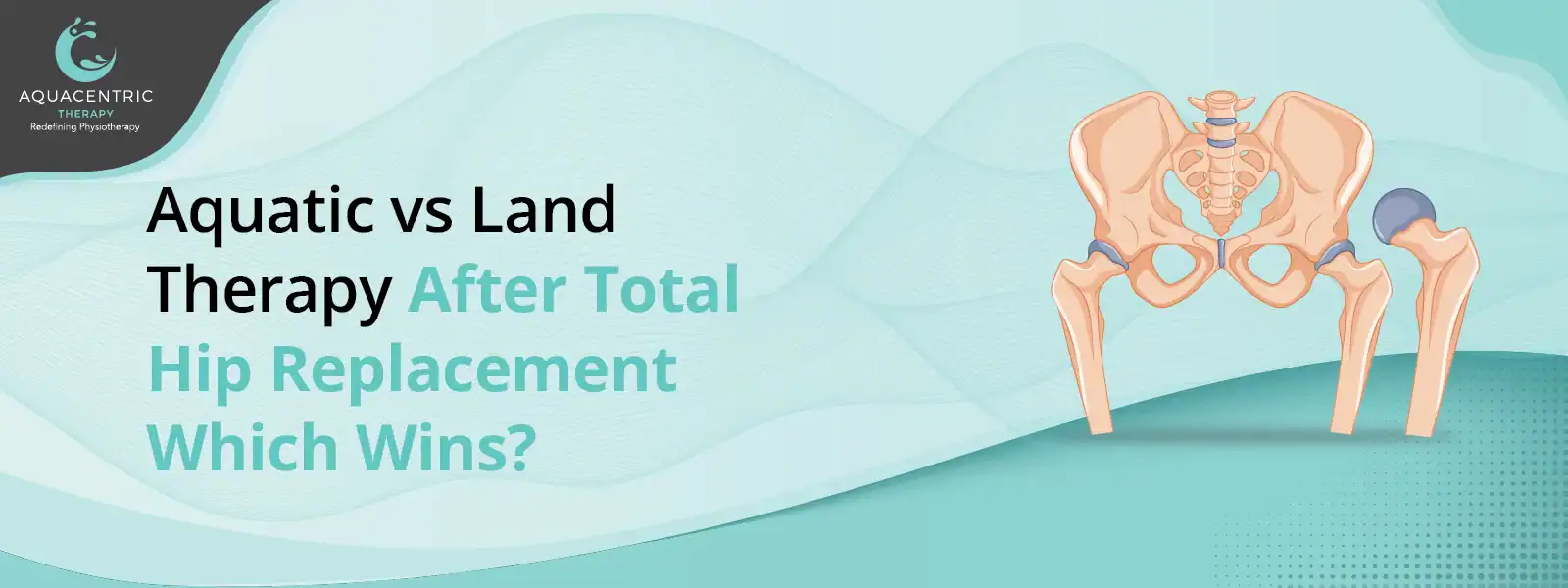
Recovering from total hip replacement surgery requires time, patience, and a proper rehabilitation programme. While surgery replaces the damaged joint, it is only the beginning of your recovery journey. Following a well-structured and consistent hip replacement rehabilitation programme can help you restore strength, mobility, and everyday movement.
This makes the aquatic therapy vs land therapy debate so interesting after total hip replacement. While both approaches work, they serve different stages of healing. In this guide, we compare the two and lay out a complete rehabilitation programme that actually works in real life. AquaCentric’s integrated approach blends aquatic and land therapies, helping patients recover 1.5x faster. This will help you get back to walking, climbing stairs, and living confidently sooner than you might expect.
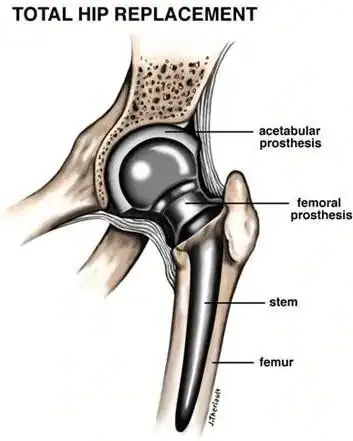
Land-Based Therapy: Benefits and Limitations After Hip Replacement
Land-based therapy simply means doing your exercises on solid ground, walking, strengthening moves, and balance work that directly prepare you for daily life. It forms the backbone of post-hip replacement rehabilitation because nothing else trains your body quite like gravity does.
As no special equipment or pool is required, most patients are impressed by how accessible this therapy is. Additionally, the movements practised directly correlate with daily tasks such as getting up from a chair or navigating your home. Over time, this will help you:
- Build lasting strength and stability
- Improve your balance
- Restore your natural walking returns
- You will feel more equipped to deal with stairs and uneven surfaces.
Common land therapy exercises you’ll encounter include:
- Ankle pumps & heel slides
- Straight leg raises
- Mini squats
- Short-distance walking
- Balance training
As you progress, your therapist will add resistance bands, step-ups, and proper gait training. Land-based work is irreplaceable for building the functional power that lets you live life on your own terms.
Aquatic Therapy: Why Water Accelerates Hip Replacement Recovery
Imagine you step into warm water, and suddenly your new hip feels lighter, almost weightless. That’s the magic of aquatic therapy, also known as hydrotherapy, and it’s changing recovery timelines for patients every week at our clinic.
Performed one-on-one with a therapist in a controlled warm-water pool, these sessions use water’s natural properties to your advantage. Buoyancy cuts your effective body weight to just one-tenth, so you get up to 90% less stress on the joint. Hydrostatic pressure gently squeezes swelling down. The warmth relaxes tight muscles and eases pain, while water’s viscosity and turbulence give you safe, natural resistance for strength and balance.
Patients often tell us the difference is immediate: far less pain and muscle tightness, almost no fear of falling, and the freedom to start gentle mobility as early as around day 14 once the wound has healed. Many see 1.5x faster recovery with aquatic physiotherapy compared to land-only routines. It simply lets you move more, earlier, and with greater confidence.
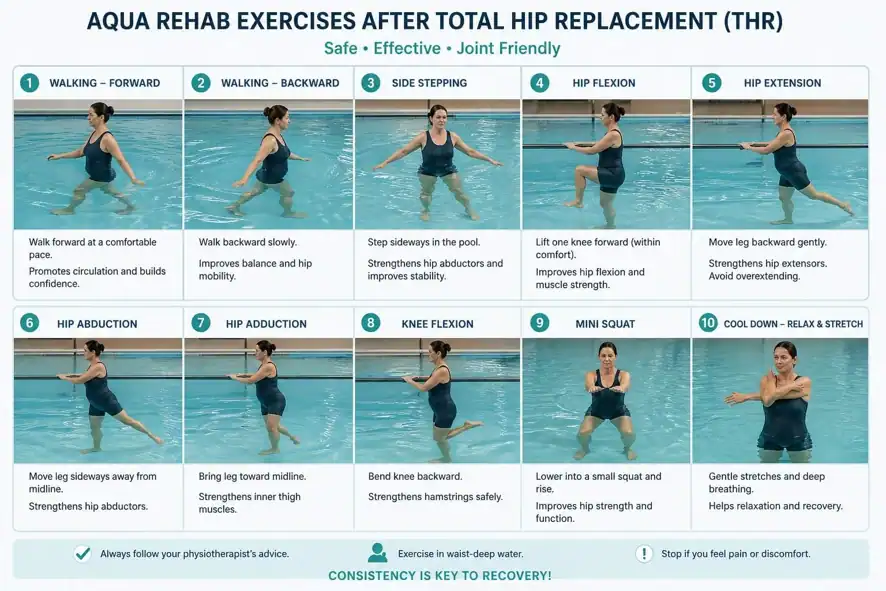
Typical aquatic therapy exercises include:
- Walking in shallow water
- Hip flexion/extension in water
- Side leg lifts
- Water jogging
- Core stability using turbulence
You’ll also do forward, backward, and sideways walking; supported squats; hip abduction and adduction; step training; and balance activities. All of it feels easier in water, which is why hydrotherapy for hip replacement shines in the early and middle stages of physical therapy after hip replacement.
Aquatic Therapy vs Land Therapy: Key Differences at a Glance
When patients sit with us and ask which path is right, we pull up this simple side-by-side view. It makes the choice clearer:
| Factor | Land Therapy | Aquatic Therapy |
|---|---|---|
| Joint stress | Higher | Up to 90% less due to buoyancy |
| Pain level | Often higher early on | Reduced pain & muscle tightness |
| Fall risk | Higher | Lower (due to water support) |
| Early start | Usually within 2–6 weeks | Can start 14 days post-surgery |
| Recovery speed | Standard | Can support faster early recovery |
| Best for | Functional training, later stages | Early mobility and pain management |
| Accessibility | Widely available | Requires a therapy pool & a therapist |
The truth is, both therapies improve function and quality of life after hip replacement. Aquatic therapy wins for early pain relief, better range of motion, and quicker progress. Land therapy is non-negotiable for real-world strength and movement. At AquaCentric, we rarely use just one; we combine them because that’s what delivers the best results in hip replacement rehabilitation.
Is poor rehab putting your hip recovery at risk?
A Complete Rehabilitation Program: Combining Aquatic + Land Therapy
Recovery after hip replacement doesn’t follow a single path. It follows a sequence. What your body needs in the first two weeks is very different from what it needs at three months. A structured, phase-wise post-surgery physiotherapy, combining aquatic and land therapy, is how we make sure each stage of that sequence is handled correctly. Here’s how we do it at AquaCentric.
Phase 1: Early Recovery (Days 3–14)
- Focus: pain control, swelling reduction, gentle movement.
- Land: ankle pumps, heel slides, bed exercises, breathing exercises, and static muscle contractions.
- Aquatic: It is usually not started yet unless your surgeon approves. To prevent complications like deep vein thrombosis, we strictly follow precautions, avoid hip flexion beyond 90 degrees, avoid crossing legs, and twisting.
Phase 2: Early Mobilisation (Weeks 2–6)
- Focus: walking, initial strength, range of motion.
- Land: assisted walking and basic strengthening.
- Aquatic: water walking, gentle leg movements, and basic balance exercises begin once the wound has healed.
This combination speeds early functional recovery while keeping you comfortable.
Phase 3: Strengthening & Function (Weeks 6–12)
- Focus: building strength, balance, and endurance.
- Land: squats, step-ups, resistance bands, balance training.
- Aquatic: faster walking, resistance-based movements, dynamic balance activities.
Together, they improve muscle strength and coordination, and normalise your walking pattern.
Phase 4: Long-Term Maintenance (3+ months)
- Focus: return to normal activities and maintain strength.
- Land: takes the lead for advanced functional training and proprioceptive exercises.
- Aquatic: sessions stay optional for endurance and pain management as you gradually return to higher-level activities.
Sample weekly schedule most patients follow:
- 3x land therapy sessions
- 1–2x one-on-one aquatic therapy sessions
- Daily home exercises
There is no specific standardised programme available for successful recovery. Every plan we build is personalised and therapist-led, adjusted to your specific condition and how you are progressing week to week. Consistency, gradual progression, and open communication about how you are feeling make all the difference in post-hip replacement rehabilitation. We are not working to a fixed schedule. We are working on your recovery.
Conclusion
Total hip replacement recovery is not only a process of healing the joint but also enhancing the quality of life. A balanced combination of aquatic and land-based therapy will make it safer, smoother and more effective to return to normal activities. If you’re looking for expert specialised aqua physiotherapy in Mumbai, we’re here to help. Contact us at AquaCentric today. One conversation can be the beginning of your path to moving pain-free and confidently again.
Worried your recovery is not progressing the right way?
FAQs
1. Is water therapy good for my hip replacement?
Yes, through hydrotherapy it is possible to dramatically cut down the stress on your new joint. This allows you to start moving much earlier in your recovery journey and with far less pain than you would feel on land.
2. What is the fastest way for me to recover from a hip replacement?
Pairing your aquatic and land therapy together under our guided supervision will likely be the most effective treatment approach. Consistently following this combined approach typically gives you 1.5x faster progress than following land-only programmes.
3. Is aqua therapy better than regular physical therapy?
You should not think of them as competing treatments. Aquatic therapy protects you and eases your pain in the early days. On the other hand, land-based therapy helps you build lasting, real-world strength. Combining both into your physical therapy after hip replacement is exactly how we deliver the strongest possible outcome for you.
4. What is the most important exercise after my hip replacement surgery?
The one you do every single day. In the very beginning, simple moves like ankle pumps and heel slides are vital to prevent complications like clots. As you heal, steady, progressive strengthening is what will ultimately win back your independence.
5. What exercises will I actually do in aquatic therapy?
You won’t just be swimming. Under the close guidance of your therapist, you will do targeted water walking, hip movements in all directions, side leg lifts, gentle jogging, and core stability work. We use the water’s natural resistance as a safe, impact-free weight room for your new hip.

Dr. Daisy Lobo - Associate Physiotherapist
Dr. Daisy Lobo (PT) is an Associate Physiotherapist at AquaCentric with 6 years of clinical experience in orthopaedic rehabilitation. She holds a Bachelor of Physiotherapy (BPT) from Father Muller College of Allied Health Sciences and is certified by the International Aquatic Therapy Faculty (IATF). Dr. Daisy is trained in Dry Needling, Kinesiology Taping, and Cupping Therapy, enabling her to provide evidence-based, personalised treatment plans that help patients reduce pain, restore movement, and return to their daily activities with confidence.
