Guillain-Barré Syndrome (GBS): Recovery, Rehabilitation & How Aquatic Therapy Helps
Experiencing sudden muscle weakness, difficulty walking, or unexplained numbness can be alarming. In some cases, these symptoms may be linked to Guillain-Barré Syndrome (GBS), a rare neurological condition that affects the body’s peripheral nerves. While GBS often develops unexpectedly and can temporarily impact mobility, balance, and even breathing, many individuals make significant recoveries with timely medical treatment and structured rehabilitation.
Recovery from GBS is often a gradual process that extends beyond hospital care. Physiotherapy plays a crucial role in helping individuals regain strength, improve movement, and return to daily activities safely. Among the various rehabilitation approaches available, aquatic therapy has emerged as a valuable option due to the supportive properties of water, which can make movement easier and less physically demanding during recovery.
What is Guillain-Barré Syndrome (GBS)?
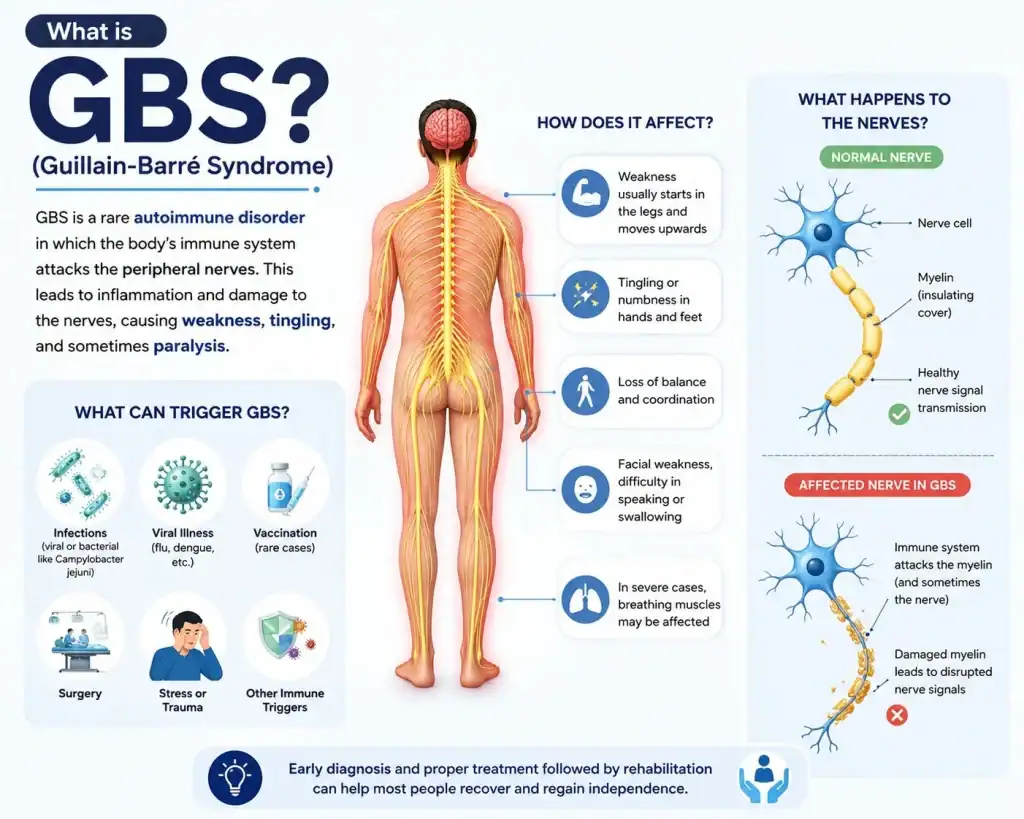
GBS is an autoimmune condition in which the peripheral nerves are attacked by the body’s immune system mistakenly. These nerves help in carrying signals between the brain, spinal cord, and muscles.
When nerve communication is disturbed, muscle weakness, numbness, tingling sensations, and difficulties in movement are experienced. Symptoms generally start in the legs and slowly progress upward. In more severe cases, the condition may impact the muscles involved in breathing, making immediate medical attention important.
Although, the onset of GBS can be sudden and troubling, many recover successfully with appropriate medical management and rehabilitation.
What Are the Different Types of Guillain-Barré Syndrome?
GBS can present in several forms, depending on which nerves are primarily affected:
- Acute Motor Axonal Neuropathy (AMAN): Primarily affects muscle strength and movement.
- Acute Motor and Sensory Axonal Neuropathy (AMSAN): Affects both muscle strength and sensory function.
- Miller Fisher Syndrome: A less common variant that mainly affects balance, coordination, and eye movements.
While symptoms may vary across these types, rehabilitation remains an important part of recovery in each case.
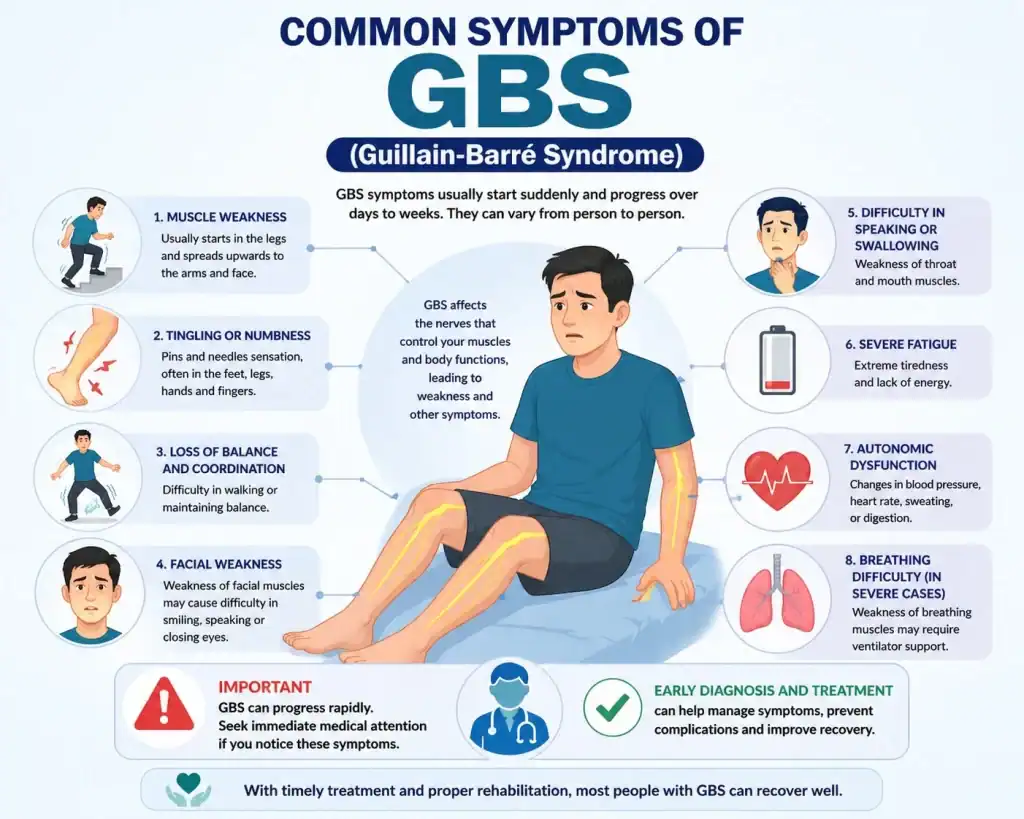
What Symptoms Should You Watch For?
Symptoms of GBS usually develop over several days or weeks and may progress rapidly. Common symptoms include:
- Weakness that generally starts in legs and moves upward
- Difficulty in walking, climbing stairs, or standing for prolonged periods
- Numbness, tingling, or altered sensation
- Lowered balance along with coordination
- Facial weakness
- Difficulty speaking or swallowing
- Severe fatigue
- Breathing difficulties in more serious cases
If weakness is progressing quickly, immediate medical attention should be sought.
What Causes Guillain-Barré Syndrome?
Although the actual cause of GBS is not always fully understood, it often develops after an infection or major physical stress. Common triggers may include the following:
- Viral infections such as influenza/dengue
- Certain bacterial infections
- Recent surgery
- Other significant physiological stressors
In simple terms, the body’s defence system becomes confused and starts attacking the nerves instead of protecting them. Although causes and symptoms may differ, other conditions which affect movement, physical function may also benefit from rehabilitation approaches such as aquatic therapy for ankylosing spondylitis.
How Is GBS Treated?
The treatment for GBS generally starts in a hospital setting, where close monitoring is important. Medical management may include:
- Intravenous Immunoglobulin (IVIG): This support in regulating of immune response.
- Plasma Exchange (Plasmapheresis): This removes harmful antibodies from the bloodstream.
- Supportive Care: It may include respiratory support and symptom management when required.
Many patients reach a stage which is stable within a few weeks, after which the focus slowly shifts toward rehabilitation along with functional recovery.
Looking for aquatic therapy support during GBS recovery?
Why Is Physiotherapy Important During GBS Recovery?
The recovery from GBS generally requires more than just medical treatment. Physiotherapy plays an important role to help individuals achieve physical function safely and progressively. Evidence shows physical exercise helps GBS patients recover strength and mobility. Patients looking for specialised neurological rehabilitation may benefit from consulting the best neurorehabilitation centre in Mumbai that offers structured recovery programmes tailored to their needs.
Physiotherapy can help with:
- Restore muscle strength
- Improve balance and coordination
- Prevent stiffness and muscle wasting
- Enhance mobility and independence
- Support a safe return to everyday activities
Recovery gradually happens in stages, including:
- Early Stage: Gentle movements and positioning, as well as joint mobility exercises.
- Intermediate Stage: Progressive strengthening and activities which build endurance are involved in this stage.
- Advanced Stage: Walking practice, balance retraining, and functional exercises which mimic our daily activities.
Avoiding overexertion is among the important things to consider during GBS recovery. Rehabilitation must be carefully guided, which supports progress without resulting in excessive fatigue.
How Can Aquatic Therapy Support GBS Rehabilitation?
During the recovery phase, exercising in a controlled water environment can be especially helpful.
Why water helps:
- Buoyancy: Reduces the body weight effects, making movement easier for weakened muscles.
- Body Support: Creates an environment which is safer and has a lower fear of falling.
- Warm Water: This helps in relaxing the muscles, which not only reduces any physical discomfort but also reduces stiffness.
- Natural Resistance: Supports gentle strengthening without placing too much strain on recovering muscles and joints.
For many patients recovering from GBS, the movements which feel difficult on land may become more manageable in water. This helps in improving confidence and participation in therapy.
What Does Aquatic Therapy for GBS Typically Involve?
A structured aquatic rehabilitation programme may include:
- Walking exercises in water to support gait retraining
- Assisted balance and stability exercises
- Trunk and core strengthening activities
- Functional movement training including stepping, turning, and weight shifting
- Low-impact endurance exercises
Activities like these support patients’ progress from basic mobility to greater independence along with confidence in movements.
How Does AquaCentric Support Recovery from GBS?
Aquatic rehabilitation programmes at AquaCentric have been created to help every individual’s recovery stage and also functional goals. Being a trusted rehabilitation centre, AquaCentric Therapy is often considered among the best physiotherapy clinics in Mumbai for its aquatic rehabilitation and care focused on recovery.
Our approach includes:
- Extensively evaluating the current physical abilities of the patient
- Personalised rehabilitation planning
- Integration of aquatic and land-based physiotherapy
- Continuous progress monitoring and programme adjustments
Our focus:
The focus remains on safe progression, minimising fatigue, rebuilding strength, and helping individuals regain confidence throughout their recovery journey.
What Can You Expect During Recovery?
Recovery timelines can be different for every individual, but through the right approach, patients can notice:
- An improvement in the muscle strength
- Balance and coordination improved
- Better mobility and independence
- Greater confidence in everyday movement
- Overall better quality of life
A successful recovery journey includes patience along with a structured rehabilitation plan.
Explore our aquatic rehabilitation programmes for neurological and physical recovery.
Conclusion
Although Guillain-Barré Syndrome can develop suddenly and present significant challenges, recovery is not difficult when taking the support of the right medical care and rehabilitation programme on time. Physiotherapy plays an important role in regaining strength and mobility as well as independence, while aquatic therapy offers a supportive environment that can make movement safer and more achievable during recovery.
At AquaCentric, our aim is supporting individuals in their rehabilitation journey and helping them to regain not just physical function but even confidence in daily life-associated movements. To understand more about our aquatic rehabilitation programmes or discuss your recovery needs, you can contact us today.
FAQs
1. What are the early symptoms of Guillain-Barré syndrome?
Early symptoms often include tingling, numbness, or weakness in the feet and legs that may gradually spread to the upper body. Some individuals may also experience difficulty walking or maintaining balance.
2. What is the best treatment for Guillain-Barré syndrome?
Treatment typically involves medical interventions such as intravenous immunoglobulin (IVIG) or plasma exchange, along with supportive care and rehabilitation. The most appropriate treatment depends on the individual’s condition and should be determined by a healthcare professional.
3. How does aquatic therapy help GBS patients?
Aquatic therapy provides a supportive, low-impact environment that can make movement easier and more comfortable during recovery. It may help improve strength, mobility, balance, and confidence while reducing stress on the joints.
4. Is swimming good for GBS?
Swimming or water-based exercise may be beneficial for some individuals during recovery, but it should only be undertaken with medical approval and appropriate supervision. Recovery needs vary, and activities should be tailored to the individual’s abilities and stage of rehabilitation.
5. What exercises are good for GBS recovery?
Exercises for GBS recovery may include gentle range-of-motion movements, strengthening exercises, balance training, and walking practice. A physiotherapist can recommend a programme that matches the individual’s recovery stage and helps avoid overexertion.

Dr. Vedant Shah - Physiotherapist
Dr. Vedant Shah is a Physiotherapist at AquaCentric with a special interest in the rehabilitation of neurological conditions. He holds a Master of Physiotherapy (MPT) from M. S. Ramaiah University of Applied Sciences and has 2 years of clinical experience. Trained in COMT, Dry Needling, Vestibular Rehabilitation, and Myofascial Release (MFR), he provides evidence-based, personalised treatment plans to help patients regain mobility, balance, and independence. He also presented at SIPCON 2025, Vadodara, demonstrating his commitment to continuous professional development and quality patient care.
